Recent surveys of employer hiring practices and longitudinal studies of socioeconomic mobility reveal a consistent, though nuanced, relationship between measured IQ scores and the spectrum of career trajectories and personal decisions people make. While IQ is not destiny, understanding how distinct score ranges translate into real‑world opportunities can help detail‑oriented researchers and professionals devise more precise development plans.
Map the Score: Define What Each IQ Bracket Represents
IQ tests traditionally distribute scores along a bell curve, with the average set at 100 and a standard deviation of 15. For practical analysis, the range can be broken into four actionable categories:
- Below 85 (Low‑Average to Below Average) – Often linked to limited abstract reasoning speed and working‑memory capacity.
- 85‑115 (Average to High‑Average) – Encompasses the majority of the workforce; analytical ability sufficient for most technical and managerial roles.
- 115‑130 (Superior) – Indicates strong problem‑solving skills, rapid pattern recognition, and a higher propensity for complex theoretical work.
- Above 130 (Genius‑Level) – Reflects exceptional cognitive processing, frequently associated with innovative research, strategic leadership, and high‑stakes entrepreneurship.
These brackets serve as a diagnostic framework rather than a prescriptive label, enabling a systematic assessment of which occupational environments align with an individual’s cognitive profile.
Align Career Paths with Cognitive Strengths
Employers increasingly employ aptitude testing to match candidates with roles that demand specific mental capabilities. By translating a candidate’s IQ range into a set of skill expectations, organizations can reduce turnover and increase job satisfaction. Consider the following use cases:
- Technical trades and operational roles – Individuals scoring 85‑115 often excel in structured environments where procedural knowledge and repetitive precision are paramount.
- Mid‑level management and analytics – Scores in the 115‑130 bracket correlate with the ability to synthesize data across departments, forecast trends, and drive process improvements.
- Research, design, and executive strategy – Those above 130 tend to thrive in roles that require abstract thinking, long‑term visioning, and the capacity to navigate ambiguous problems.
Applying this alignment early—in education counseling, vocational training, or internal talent reviews—creates a feedback loop that directs resources toward pathways where individuals are most likely to succeed.
Guide Life Decisions Beyond the Workplace
IQ scores also intersect with broader life choices, such as financial planning, relationship dynamics, and health management. High‑scoring individuals may gravitate toward complex investment strategies, whereas lower‑scoring groups often benefit from simplified budgeting tools and guided decision‑making frameworks. Researchers have observed that:
- Individuals with scores below 85 are statistically more likely to rely on structured support systems for major purchases and retirement planning.
- Those in the average range typically adopt a balanced approach, mixing professional development with personal enrichment activities.
- Higher‑than‑average scores are linked to early adoption of emerging technologies and unconventional career pivots.
Understanding these patterns enables policy makers and social service providers to tailor interventions—such as financial literacy workshops or mentorship programs—to the cognitive profile most at risk of suboptimal outcomes.
Implement a Data‑Driven Decision Framework
For researchers seeking to operationalize the insights above, a three‑step methodology can transform raw IQ data into actionable strategies:
- Benchmark – Collect baseline IQ scores across the target population, ensuring measurement consistency.
- Segment – Categorize individuals according to the four brackets defined earlier, then map each segment to relevant occupational and life‑choice metrics.
- Intervene – Deploy customized programs—career counseling, skill‑building curricula, or decision‑support tools—that address the specific strengths and gaps of each segment.
By iterating this cycle annually, organizations can monitor shifts in outcomes, refine selection criteria, and ultimately enhance both employee fulfillment and organizational performance.
Future Outlook: Balancing Cognitive Assessment with Holistic Evaluation
While the correlation between IQ score ranges and career or life decisions remains robust, emerging research emphasizes the importance of complementary factors—emotional intelligence, creativity, and resilience. Integrating these dimensions with traditional IQ metrics promises a more comprehensive portrait of potential, reducing the risk of over‑reliance on a single number.
In sum, a nuanced appreciation of how IQ score ranges can affect your career and life choices equips detail‑oriented researchers, educators, and policymakers with a strategic lens. By aligning cognitive assessments with targeted interventions, stakeholders can foster pathways that respect individual capabilities while promoting broader socioeconomic equity.
Major Components You Can Spot While Looking At Opened LV And MV
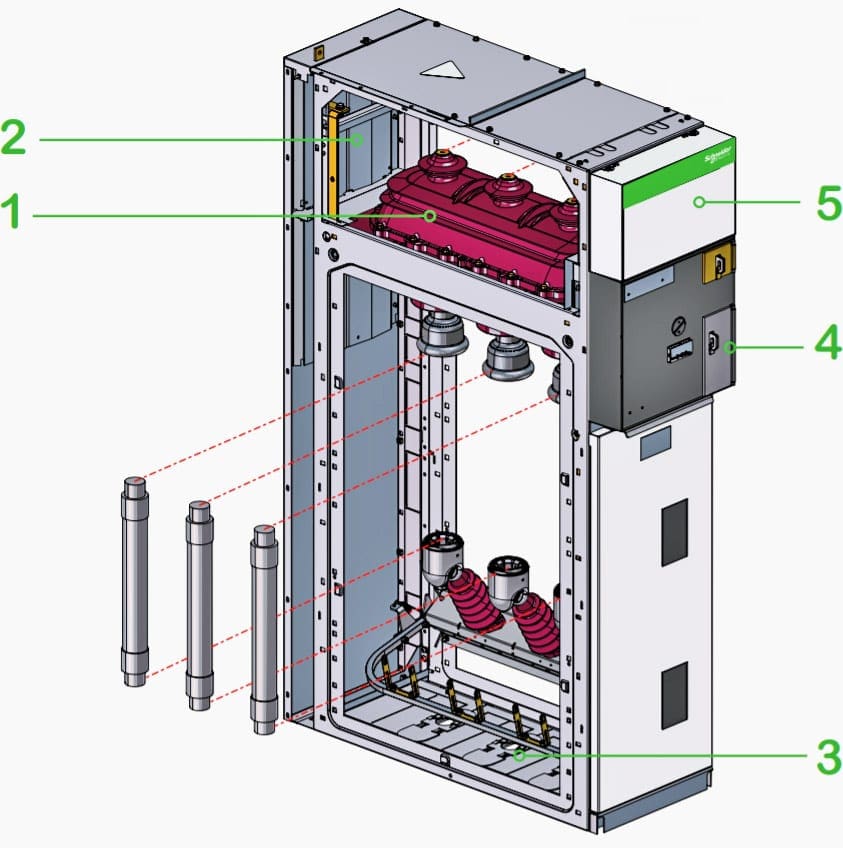
Major components you can spot while looking at opened LV and MV ...